


Verify Course Approval
Total Shoulder Arthroplasty: Evidence-Based Update
Get This Course and Hundreds More with an Unlimited Access CE Subscription!
Unlimited access to hundreds of CE hours included
Flexibility to complete your CE on your schedule, wherever you are!
New courses developed regularly, so you'll have up-to-date content to meet your needs and requirements
Course Description
This advanced continuing education course provides an up-to-date, evidence-based overview of rehabilitation and complication management after anatomic and reverse total shoulder arthroplasty (TSA). Using current research and clinical guidelines, the course reviews surgical indications, compares outcomes of anatomic vs. reverse TSA, and outlines phase-based rehab protocols with clear ROM and strengthening progressions.
Learners will examine accelerated vs. conservative protocols, home-based vs. supervised therapy, and practical modifications for high‑risk patients (e.g., diabetes, obesity, rheumatoid arthritis, prior surgery, psychological comorbidities). The course emphasizes early recognition and management of common complications such as subscapularis failure, rotator cuff dysfunction, infection, loosening, and dislocation, and uses case studies to build advanced clinical reasoning for complex TSA presentations.
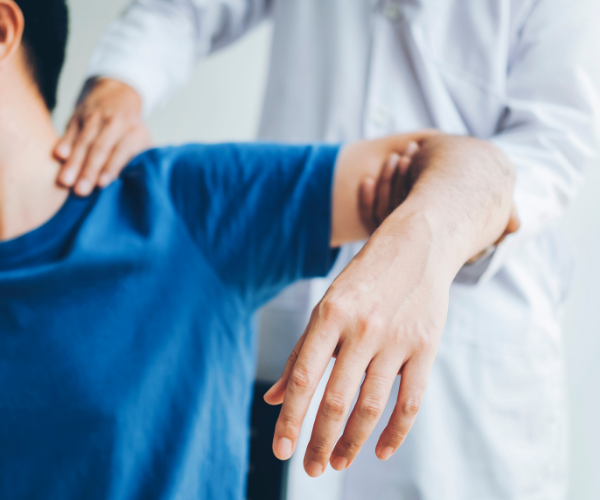
Total Shoulder Arthroplasty: Evidence-Based Update
Additional Course Details
0:00 - Introduction to Total Shoulder Arthroplasty
2:57 - Anatomic Total Shoulder Arthroplasty
5:41 - Reverse Total Shoulder Arthroplasty
8:29 - Comparative Outcomes
12:29 - Rehabilitation Protocols for Anatomic Arthroplasty
15:23 - Phase One Rehabilitation
18:34 - Phase Two Rehabilitation
22:01 - Phase Three Rehabilitation
26:02 - Outcome Measures and Protocol Variability
29:54 - Rehabilitation for Reverse Arthroplasty
33:30 - Accelerated Rehabilitation
37:29 - Exercise Selection and Protocols
41:26 - Conservative Protocols
45:23 - Complications and Management
50:02 - Subscapularis and Glenoid Issues
54:42 - Rotator Cuff Dysfunction
59:35 - Infection and Dislocation
64:53 - Pain and Surveillance
69:53 - High-Risk Populations
74:20 - Diabetes and Psychological Factors
80:46 - Obesity and Rheumatoid Arthritis
84:12 - Medical Optimization
89:32 - Case Studies
93:02 - Case Study One: Anatomic Arthroplasty
94:55 - Case Study Two: Reverse Arthroplasty
97:27 - Case Study Three: Revision Arthroplasty
100:37 - Case Integration and Clinical Reasoning
102:56 - Course Conclusion
104:41 - Principles and Practice
106:46 - Complication Management
108:50 - Patient-Centered Outcomes
111:08 - Advancing Clinical Practice
113:03 - Emerging Technologies
114:36 - Professional Development
- Differentiate TSA indications (cuff integrity, age, comorbidities).
- Classify & modify protocols for high-risk subgroups.
- Analyze biomechanical principles & rehab implications.
- Assess & manage complications (cuff failure, loosening, infection).
- Evaluate evidence-based protocols (phase progression, ROM targets).
- Compare TSA outcomes & complication profiles.
- Apply clinical reasoning to complex TSA cases.
Personnel Disclosure:
Financial – Anne Osborn, PT, MPT is the member manager of Ridley Learning. She receives compensation for the authorship of this course.
Nonfinancial - no relevant nonfinancial relationship exists.
No relevant conflicts of interest exist for any member of the activity planning committee.
Advanced
Cancellation Policy: For activity cancellation, returns, or complaint resolution, please contact us by email help@ridleylearning.com. We have a 100% satisfaction guarantee. Refunds will be issued for courses who's credit has not been issued (exams have not been completed), or for any course that has been rejected by your board of approval. Webinar cancellations and exchanges must be completed 24 hours prior to the scheduled start time.