


Verify Course Approval
Wound Care Assessment and Management: Integrating AI Tools into Clinical Practice
Get This Course and Hundreds More with an Unlimited Access CE Subscription!
Unlimited access to hundreds of CE hours included
Flexibility to complete your CE on your schedule, wherever you are!
New courses developed regularly, so you'll have up-to-date content to meet your needs and requirements
Course Description
This course provides healthcare professionals with a comprehensive, evidence‑based framework for assessing and managing complex wounds while integrating emerging AI tools that enhance diagnostic accuracy, documentation, and clinical decision‑making. Learners will deepen their understanding of validated assessment systems, etiology‑specific interventions, and the influence of comorbidities on healing outcomes across diabetic foot ulcers, pressure injuries, venous leg ulcers, and surgical site infections.
Through structured modules and real-world case studies, the course demonstrates how AI-supported wound imaging, measurement, and telehealth can streamline workflows, improve care coordination, and reduce healthcare utilization without compromising outcomes. Participants gain practical, clinically applicable skills in dressing selection, vascular assessment, nutrition optimization, and interdisciplinary collaboration. This course is ideal for clinicians seeking to elevate their wound care practice with the newest evidence and digital health capabilities that directly improve patient outcomes.
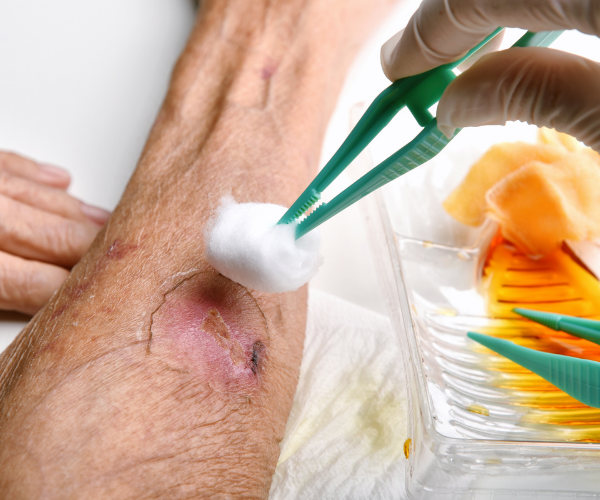
Wound Care Assessment and Management: Integrating AI Tools into Clinical Practice
Additional Course Details
0:00 - Introduction
3:53 - Module 1: Foundations of Wound Assessment
17:57 - Module 2: Evidence-Based Wound Management
36:03 - Module 3: Dressing Selection and Nutritional Interventions
48:46 - Module 4: Impact of Comorbidities on Wound Healing
1:01:43 - Module 5: AI Diagnostic Accuracy in Wound Care
1:12:50 - Module 6: AI-Driven Treatment in Wound Care
1:25:10 - Module 7: Interprofessional Wound Care
1:37:45 - Module 8: Case Study 1
1:42:35 - Case Study 2
1:46:48 - Case Study 3
1:50:44 - Case Study 4
1:54:59 - Case Study 5
2:16:37 - End
- Identify validated classification systems used to evaluate diabetic foot ulcers, pressure injuries, and venous leg ulcers.
- Compare evidence-based management strategies for common chronic wound types and surgical site infections.
- Select appropriate wound dressings and nutritional interventions based on wound characteristics and patient factors.
- Differentiate how obesity, peripheral artery disease, diabetes, and chronic kidney disease impair wound healing.
- Identify the clinical applications and limitations of artificial intelligence tools in wound assessment.
- Evaluate the evidence supporting AI-driven treatment recommendations and telehealth wound monitoring on clinical outcomes.
- Analyze a clinical wound care scenario to determine appropriate assessment strategies and evidence-based interventions.
Personnel Disclosure:
Financial – Anne Osborn, PT, MPT is the member manager of Ridley Learning. She receives compensation for the authorship of this course.
Nonfinancial - no relevant nonfinancial relationship exists.
No relevant conflicts of interest exist for any member of the activity planning committee.
Advanced
Cancellation Policy: For activity cancellation, returns, or complaint resolution, please contact us by email help@ridleylearning.com. We have a 100% satisfaction guarantee. Refunds will be issued for courses who's credit has not been issued (exams have not been completed), or for any course that has been rejected by your board of approval. Webinar cancellations and exchanges must be completed 24 hours prior to the scheduled start time.