


Verify Course Approval
Autism Across the Lifespan: Evidence-Based Update
Get This Course and More with an Unlimited Access CE Subscription!
Unlimited access to the entire library of CE courses included
Flexibility to complete your CE on your schedule, wherever you are!
New courses developed regularly, so you'll have up-to-date content to meet your needs and requirements
Course Description
Advance your clinical expertise with Autism Across the Lifespan: Evidence-Based Update, a comprehensive continuing education course designed for healthcare professionals working with autistic individuals. This course synthesizes the latest research (2022–2026) and clinical guidelines to help you confidently identify, assess, and treat autism spectrum disorder (ASD) across pediatric and adult populations.
Learn practical, evidence-based strategies for sensory, motor, communication, and mental health considerations, while applying neurodiversity-affirming, patient-centered care. Through real-world case studies and interdisciplinary insights, you’ll improve outcomes in settings ranging from early intervention to adult healthcare. Ideal for clinicians seeking CE credits in autism, neurology, pediatrics, and rehabilitation, this course translates complex evidence into actionable clinical practice.
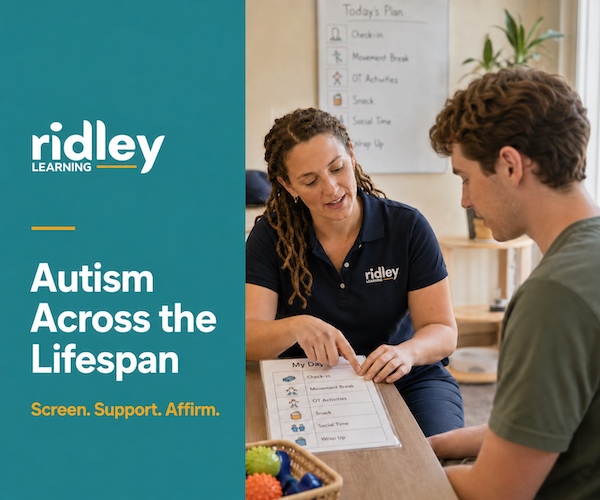
Autism Across the Lifespan: Evidence-Based Update
Additional Course Details
00:00 - Introduction
3:33 - Module 1: Foundations: DSM-five-TR Criteria, Epidemiology, and Etiology
19:27 - Module 2: Neurodiversity and Communication
34:09 - Module 3: Identification and Diagnosis
52:55 - Module 4: Sensory, Motor, and Communication
1:12:15 - Module 5: Co-occurring Conditions and Mortality
1:30:16 - Module 6: Early Childhood Through School-Age
1:45:22 - Module 7: Early Childhood Through School-Age
2:10:49 - End
- Define the DSM-5-TR diagnostic criteria and severity levels for autism spectrum disorder.
- Describe the neurodiversity paradigm and its influence on clinical
- communication with autistic individuals.
- Identify validated screening and diagnostic tools for autism across pediatric and adult populations.
- Recognize core sensory, motor, and communication differences commonly observed in autistic individuals.
- List common co-occurring physical and mental health conditions associated with autism spectrum disorder.
- Explain evidence-based early childhood and school-age interventions for autistic children.
- State the key principles of adolescent transition planning and autism-affirming adult healthcare.
Personnel Disclosure:
Financial – Anne Osborn, PT, MPT is the member manager of Ridley Learning. She receives compensation for the authorship of this course.
Nonfinancial - no relevant nonfinancial relationship exists.
No relevant conflicts of interest exist for any member of the activity planning committee.
Intermediate
Cancellation Policy: For activity cancellation, returns, or complaint resolution, please contact us by email help@ridleylearning.com. We have a 100% satisfaction guarantee. Refunds will be issued for courses who's credit has not been issued (exams have not been completed), or for any course that has been rejected by your board of approval. Webinar cancellations and exchanges must be completed 24 hours prior to the scheduled start time.