


Verify Course Approval
Illinois Mandatory: Sexual Harassment Prevention in the Workplace
Get This Course and More with an Unlimited Access CE Subscription!
Unlimited access to the entire library of CE courses included
Flexibility to complete your CE on your schedule, wherever you are!
New courses developed regularly, so you'll have up-to-date content to meet your needs and requirements
Course Description
This course meets the Sexual Harassment course requirement for Illinois.
Sexual harassment remains one of the most pervasive and under-reported — occupational hazards in healthcare, with fewer than ten percent of affected workers filing formal complaints. This evidence-based course equips allied health professionals with the legal, clinical, and organizational knowledge needed to recognize, report, and prevent workplace sexual harassment. You'll examine the federal Title VII and Illinois Human Rights Act frameworks, explore the structural risk factors unique to healthcare settings, including isolated treatment environments, therapeutic touch, and hierarchical power dynamics — and review the documented health consequences for targeted clinicians, from burnout and PTSD to workforce attrition. The course also details internal and external reporting procedures, anti-retaliation protections, and the employer-level prevention strategies that current research shows are most effective. If you work in any healthcare setting, this course provides critical tools for safeguarding yourself, your colleagues, and your patients.
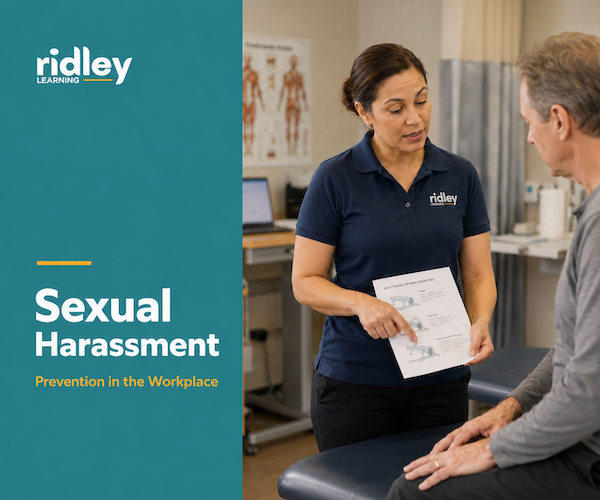
Illinois Mandatory: Sexual Harassment Prevention in the Workplace
Additional Course Details
00:00 - Introduction
3:14 - Module 1: Legal Foundations and Definitions of Sexual Harassment
12:46 - Module 2: Prevalence, Health Consequences, and Structural Risk Factors in Healthcare
26:48 - Module 3: Recognition of Sexual Harassment in Clinical Work Environments
33:49 - Module 4: Reporting Procedures and Whistleblower Protections
43:00 - Module 5: Employer Obligations and Evidence-Based Prevention Strategies
53:54 - Exam Review
1:00:44 - End
- Define quid pro quo and hostile work environment as the two principal forms of workplace sexual harassment.
- Identify organizational and environmental risk factors for sexual harassment in healthcare settings.
- Describe the health, psychological, and professional consequences of workplace sexual harassment for healthcare workers.
- Recognize verbal, physical, visual, and digital forms of sexual harassment in clinical work environments.
- List the recommended steps for reporting workplace sexual harassment through internal and external channels.
- Explain employer obligations for preventing and responding to workplace sexual harassment.
- State the anti-retaliation protections available to healthcare workers who report workplace sexual harassment.
Personnel Disclosure:
Financial – Anne Osborn, PT, MPT is the member manager of Ridley Learning. She receives compensation for the authorship of this course.
Nonfinancial - no relevant nonfinancial relationship exists.
No relevant conflicts of interest exist for any member of the activity planning committee.
Intermediate
Cancellation Policy: For activity cancellation, returns, or complaint resolution, please contact us by email help@ridleylearning.com. We have a 100% satisfaction guarantee. Refunds will be issued for courses who's credit has not been issued (exams have not been completed), or for any course that has been rejected by your board of approval. Webinar cancellations and exchanges must be completed 24 hours prior to the scheduled start time.