


Verify Course Approval
Osteoporosis: Evidence-Based Update
Get This Course and More with an Unlimited Access CE Subscription!
Unlimited access to the entire library of CE courses included
Flexibility to complete your CE on your schedule, wherever you are!
New courses developed regularly, so you'll have up-to-date content to meet your needs and requirements
Course Description
Osteoporosis is a "silent disease" and a major public health crisis, often asymptomatic until a devastating fragility fracture occurs. This advanced continuing education course moves beyond basic definitions to explore the pathophysiology of bone loss, current evidence-based screening protocols, and the "what" and "how" of modern pharmacological and non-pharmacological treatments.
Designed for the non-specialist frontline clinician, this course equips the learner to identify at-risk patients, interpret diagnostic reports (such as T-scores and FRAX), and implement interdisciplinary management strategies. The curriculum emphasizes the economic and human burden of the disease and outlines specific roles for nursing and allied health in patient education, fall prevention, and long-term adherence to therapy.
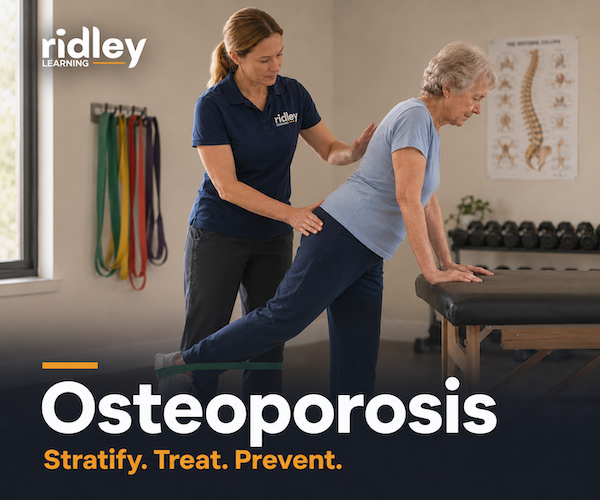
Osteoporosis: Evidence-Based Update
Additional Course Details
0:00 - Introduction to Osteoporosis
1:48 - Advancements in Osteoporosis Management
2:51 - Course Objectives
4:49 - Bone Biology and Remodeling
10:14 - Osteoporosis Diagnosis and Criteria
14:00 - Bone Quality and Fracture Risk
18:57 - Risk Factors for Osteoporosis
23:11 - Fracture Risk and Family History
27:25 - Fracture Risk Assessment Tools
31:32 - Limitations of FRAX
35:28 - Fall Risk and Screening Recommendations
41:41 - Bisphosphonates and Denosumab
46:04 - Anabolic Agents
49:45 - Treatment Sequencing and Drug Holidays
53:34 - Pharmacologic Management of Osteoporosis
59:42 - Calcium and Vitamin D
61:34 - Exercise and Fall Prevention
65:12 - Fall Prevention Strategies
68:59 - Adherence and Non-Pharmacologic Interventions
72:20 - Special Populations: CKD and Diabetes
75:51 - Frailty and Osteoporosis in Men
79:40 - Health Disparities in Osteoporosis Care
83:44 - Adherence Challenges and Strategies
88:19 - Fracture Liaison Services
93:21 - Case Studies: High Fracture Risk
98:21 - Case Studies: Diabetes and CKD
101:46 - Case Studies: Frailty and Dementia
104:56 - Case Studies: Multicomponent Approach
108:44 - Conclusion and Course Summary
116:05 - Exam Review
- Differentiate between osteoporosis and osteopenia based on World Health Organization diagnostic criteria, bone mineral density T-score thresholds, and clinical indicators of fragility fracture risk.
- Analyze the clinical utility of fracture risk assessment tools, including FRAX, in determining treatment thresholds and guiding pharmacologic intervention decisions for postmenopausal women and men with low bone mass.
- Compare the mechanisms of action, fracture risk reduction efficacy, and adverse effect profiles of antiresorptive agents (bisphosphonates, denosumab) and anabolic agents (teriparatide, abaloparatide, romosozumab) in the management of osteoporosis.
- Evaluate the evidence supporting anabolic-first treatment sequencing versus antiresorptive-first strategies for patients at very high fracture risk, including considerations for optimal therapy duration and transition protocols.
- Assess the effectiveness of non-pharmacologic interventions including calcium and vitamin D supplementation, weight-bearing and resistance exercise, and fall prevention strategies in reducing fracture risk and improving bone health outcomes across diverse patient populations.
- Determine appropriate osteoporosis management modifications for special populations, including patients with chronic kidney disease, diabetes mellitus, frailty, and those from underserved racial and ethnic groups affected by healthcare disparities.
- Apply principles of multidisciplinary, team-based care including fracture liaison services, nurse-led and pharmacist-led interventions, and caregiver support strategies to develop individualized plans that optimize adherence and clinical outcomes in patients with osteoporosis.
Personnel Disclosure:
Financial – Anne Osborn, PT, MPT is the member manager of Ridley Learning. She receives compensation for the authorship of this course.
Nonfinancial - no relevant nonfinancial relationship exists.
No relevant conflicts of interest exist for any member of the activity planning committee.
Advanced
Cancellation Policy: For activity cancellation, returns, or complaint resolution, please contact us by email help@ridleylearning.com. We have a 100% satisfaction guarantee. Refunds will be issued for courses who's credit has not been issued (exams have not been completed), or for any course that has been rejected by your board of approval. Webinar cancellations and exchanges must be completed 24 hours prior to the scheduled start time.